

Are synthetic conditioners bad for your hair? It's a question that comes up often, and the answer is more nuanced than a simple yes or no.
If you've ever scanned the back of a conditioner bottle and felt overwhelmed by the ingredient list, you're not alone. Silicones, dimethicone, and other lab-created ingredients have become common in hair care products, and they come with a lot of conflicting opinions. Some say they're perfectly fine. Others warn about buildup, blocked moisture, and long-term damage.
The truth sits somewhere in the middle. This article breaks down how synthetic conditioners work, when they're okay to use, when to be cautious, and how to keep your hair healthy regardless of what's in your routine.
How Do Synthetic Conditioners Work?
Synthetic conditioners are formulas that contain lab-created ingredients engineered specifically for hair performance. The most well-known of these are silicones, a family of compounds that includes popular ingredients like dimethicone and cyclopentasiloxane.
When you apply a silicone-based conditioner, the silicone molecules coat the outer layer of each hair strand, the cuticle, creating a smooth, even surface. This is what gives hair that immediate slip and softness after washing. Silicones are especially effective at reducing frizz, making hair easier to detangle, and adding shine, which is why hair styling products with silicone remain so popular.
The effect is largely cosmetic, meaning silicones improve the look and feel of hair rather than nourishing it from the inside. That's not inherently a bad thing. But it does help explain why the long-term picture can get complicated.
Are Synthetic Conditioners OK to Use?
For most people, yes. Synthetic conditioners are generally considered safe and can be genuinely useful depending on your hair goals.
If you're preparing for a special occasion, dealing with stubborn frizz, or just want your hair to look polished and manageable, a silicone-based conditioner can deliver real results fast. They're particularly helpful for coarser or thicker hair types that benefit from extra slip during detangling.
The key is moderation. Using synthetic conditioners occasionally or strategically is very different from relying on them as the foundation of your daily routine. Your hair type, your styling habits, and how often you clarify your hair all factor into whether synthetic conditioners are a good fit for you.
The bottom line: synthetic conditioners are not something to fear, but they do work best when used with some intention.
Why You May Want to Avoid Overusing Synthetic Conditioners
Here's where things get worth paying attention to. While a single use of a silicone-based conditioner is unlikely to cause problems, regular heavy use can lead to product buildup in hair over time.
Because silicones are designed to coat the hair shaft, they don't just rinse away easily with water. Each application adds another layer. Over time, that accumulation can start to work against you. The coating that once made your hair feel smooth begins to block moisture from actually penetrating the hair strand, which can leave hair feeling dry underneath a surface that still looks shiny.
Signs of buildup often include dullness, a heavy or weighed-down feeling, lack of volume, and hair that doesn't seem to respond well to conditioning treatments anymore. If your hair feels like it's going through the motions without actually improving, buildup could be part of the reason.
Removing that buildup typically requires more than a standard shampoo. A clarifying or deep-cleansing formula is usually necessary to reset the hair and scalp.
Is Silicone Bad for Hair?
Not inherently, no. Silicone is not a villain, but it does require some context.
One important distinction is between water-soluble and non-water-soluble silicones. Water-soluble silicones, which often appear on labels as ingredients ending in "-PEG" or "-PPG," can be rinsed out more easily with regular shampooing. Non-soluble silicones, like dimethicone, are more resistant to water and tend to accumulate with repeated use.
For people who wash their hair frequently and clarify regularly, non-soluble silicones may not cause much of an issue. For those who wash less often or skip clarifying steps, buildup from non-soluble silicones can become a real concern over time.
So is silicone bad for hair? The honest answer is that it depends on the type of silicone, how often you use it, and how well your routine balances it out. The problem is rarely a single use. It's accumulation without proper cleansing.
How to Get Rid of Product Buildup in Hair
Product buildup happens when residue from styling products, conditioners, and other hair care ingredients accumulates on the hair shaft and scalp over time. It's common, and the good news is that it's fixable.
Use a clarifying shampoo periodically. A clarifying shampoo is formulated to remove buildup that regular shampoos leave behind. You don't need to use one every wash, but incorporating it once a week or every few weeks can make a noticeable difference. Learn more about how this works in our clarifying shampoo guide.
Try a deep-cleansing formula. For a more thorough reset, a deep-cleanse shampoo can help clear away buildup from both the hair and scalp. The Deep Cleanse Shampoo with Charcoal + Matcha is formulated to draw out impurities while being gentle enough for regular use.
Support scalp balance. Since buildup affects the scalp as much as the hair, using a scalp-focused shampoo as part of your rotation can help maintain a healthier foundation. The Scalp Restore Shampoo with Jojoba + Aloe gently cleanses while supporting scalp comfort and hydration.
Rinse thoroughly and avoid layering too many products. Sometimes buildup has less to do with the products themselves and more to do with how they're used. Rinsing thoroughly and being selective about how many products you layer can go a long way toward preventing buildup before it starts.
Choosing Silicone-Free Hair Care Products
Silicone-free hair care products have grown in popularity as more people look for cleaner, more transparent routines. The appeal is straightforward: without a silicone coating on the hair shaft, moisture from conditioners and treatments can penetrate the strand more effectively rather than sitting on top of it.
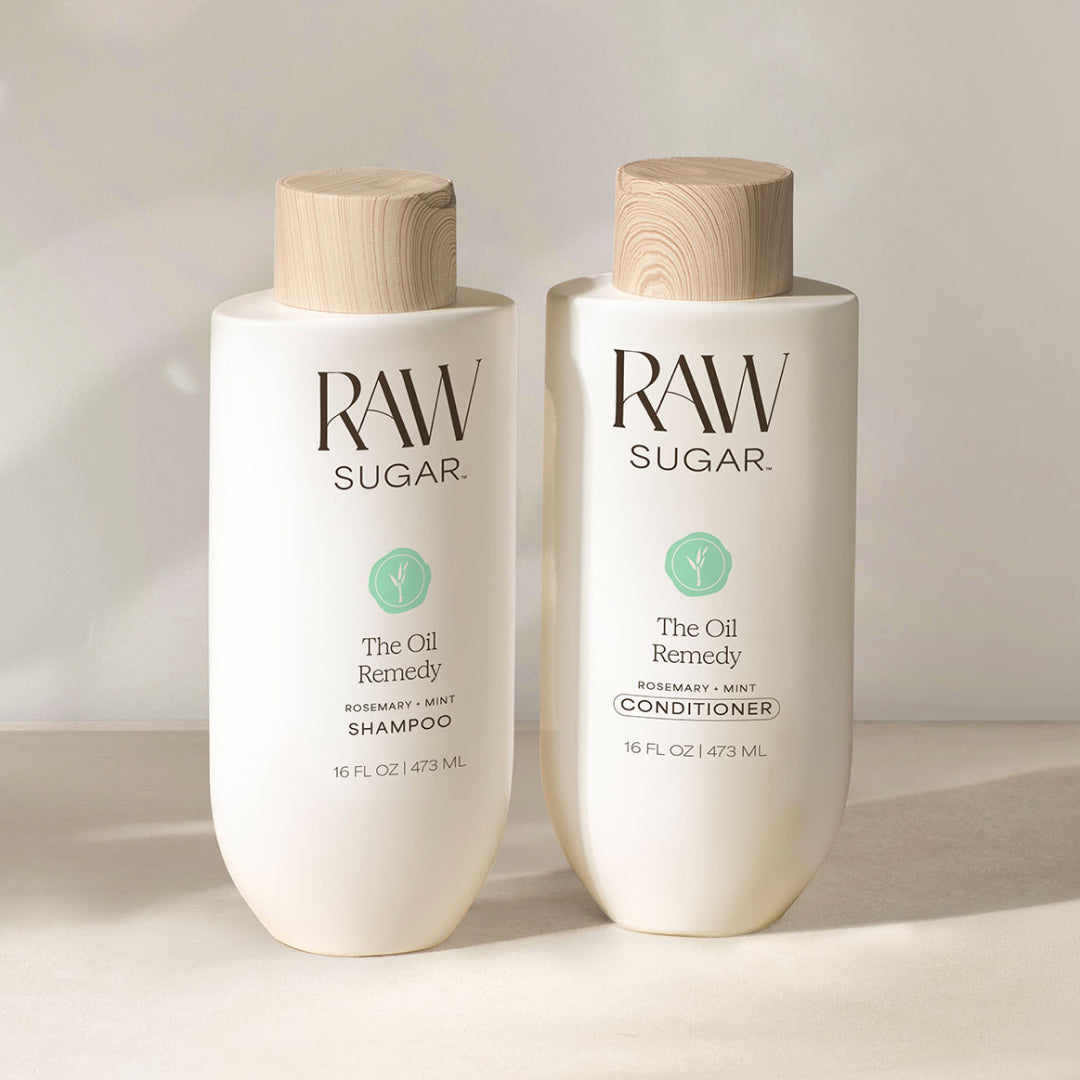
For people who want to support long-term hair health rather than just surface-level results, silicone-free formulas are worth exploring. Raw Sugar products are always formulated without silicones, ensuring that your hair gets real nourishment without being weighed down or coated with synthetic buildup.
Look for products that rely on natural alternatives to deliver hydration and shine, ingredients like aloe vera, plant oils, and botanical extracts that condition hair without coating it. Explore the full conditioner collection to find options that suit your hair's needs.
The Raw Sugar Approach to Hair Care
At Raw Sugar, we believe your hair care routine should work with your hair, not just on top of it. Our formulas are built around thoughtfully sourced, clean ingredients that focus on real hydration, scalp health, and long-term hair wellness rather than quick cosmetic fixes.
You won't find unnecessary fillers or harsh additives in our products - they are always formulated without SLS/SLES, parabens, phthalates, silicones or synthetic dyes. What you will find are formulas designed to support your hair over time, not just for one wash.
Learn more about our approach on the Raw Sugar about page, or browse our products to find the right fit for your routine.
The Bottom Line
Synthetic conditioners and silicone-based products are not something you need to eliminate entirely. They can be useful tools when used thoughtfully and balanced with proper cleansing. The main things to watch for are overuse and buildup, both of which are manageable with the right routine.
Pay attention to how your hair actually feels over time, not just how it looks right after washing. If it's starting to feel heavy, dull, or unresponsive to conditioning, it may be time to clarify and reassess what's in your routine.
Clean, well-balanced hair care leads to better results in the long run. Start by looking at your ingredient labels, and when you're ready for something more transparent, explore what better-for-you alternatives can do for your hair.