

If your usual shower is a quick rinse and out the door, the everything shower is the opposite. It is longer, more intentional, and covers every step of your hair, skin, and body care in a single session. Done right, you step out feeling genuinely reset rather than just clean.
The clean girl aesthetic helped bring the everything shower into the mainstream, but the trend is bigger than a TikTok format. It is about slowing down and being deliberate with your routine. There is just one thing worth noting: the clean girl look and clean ingredients are not the same thing. A routine can look polished on the outside and still be full of sulfates, synthetic fragrance, and fillers.
This guide walks through how to build an everything shower that is clean in both senses of the word. Each step is covered in order, the ingredient side is explained without the lecture, and there is a version here for every hair type.
What Is an Everything Shower? (And Why the Clean Girl Aesthetic Made It Famous)
An everything shower is exactly what it sounds like: a thorough, unhurried shower where you do everything. Shampoo and condition your hair, apply a hair mask or treatment, exfoliate your body, cleanse your skin, and take care of your face. It is not an everyday occurrence for most people. It is a weekly or bi-weekly reset that lets you give each step the time and attention it deserves.
The clean girl aesthetic gave the everything shower its cultural moment. Glossy skin, effortless hair, a routine that looks low-effort but clearly involves real care. That combination resonated because it made self-care feel achievable rather than excessive. But the aesthetic itself is neutral on ingredients. The clean girl shower trending on social media might involve a body scrub full of synthetic fragrance and a shampoo loaded with sulfates. The version we are building here starts with what actually goes into the products.
What Is Actually in a Clean Girl Everything Shower, Step by Step
Here is the full sequence in the order it makes most sense. Each step feeds into the next, so working through them in order gives you the best results.
Step 1: Pre-Shower Hair Treatment
If you are doing a deep conditioning treatment or applying a hair oil, this step happens before you get in. Apply a hair mask or a small amount of oil to dry hair, focusing on the mid-shaft and ends. Twist hair up and clip it so it stays out of the way while you handle everything else. The heat from the shower helps the treatment absorb more deeply. Leave it on for ten to thirty minutes depending on how much conditioning your hair needs.
This is optional but worth doing if your hair tends to feel dry after washing, or if you color or heat style regularly.
Step 2: Shampoo
Start at the scalp. Work your shampoo in with your fingertips using small circular motions, focusing on the roots and scalp where oil and product accumulate. You do not need to scrub the lengths aggressively. Let the lather rinse through the rest of your hair as you rinse.
If you have a sensitive scalp or prefer fragrance-free formulas, this is where choosing the right shampoo makes the most difference. A harsh sulfate-heavy shampoo strips the scalp every time you wash, which can lead to dryness, irritation, or overproduction of oil as the scalp tries to compensate. A gentle, clean formula cleanses without disrupting the scalp's natural balance.
Step 3: Condition or Deep Condition
Apply conditioner from mid-shaft to ends and let it sit for at least two to three minutes. Use this time to handle your body care steps below, so you are not just standing there waiting. If you applied a pre-shower hair treatment, you can skip the deep conditioner in this step and use a lighter rinse-out conditioner instead.
Rinse with cool water at the end. It closes the cuticle, which helps lock in moisture and adds shine.
Step 4: Body Care
Work through your body care while your conditioner processes. Start with a body scrub or exfoliant on damp skin to slough away dead cells and prep skin for cleansing. Follow with a body wash, using a loofah or cloth to work it in and create a lather. If you use an in-shower body oil, apply it to still-wet skin before turning off the water so it can seal in moisture as you dry off.
This is the step where sensitive skin needs the most consideration. Heavy synthetic fragrances and harsh surfactants in body wash are common irritants. A soap designed for sensitive skin with gentle, plant-based cleansers and no added fragrance is a simple swap that makes a real difference for reactive skin.
Step 5: Face Wash
Wash your face near the end of the shower when your pores have had time to open from the steam. Use a gentle cleanser suited to your skin type. Keep the water temperature lukewarm for this step, as hot water can strip the skin's moisture barrier and cause redness.
Step 6: Cool Water Finish
End with a brief rinse in cooler water from head to toe. It is not as dramatic as it sounds and the benefits are real. For hair, cool water seals the cuticle for better shine and reduced frizz. For skin, it helps tighten pores and calm any redness from the steam. Twenty to thirty seconds is enough.
What "Clean Ingredients" Actually Means in a Shower Routine
The clean girl aesthetic is a vibe. Clean ingredients are something you can actually verify. The difference matters because the products you use in the shower are applied to your scalp and skin every single week, and some of the most common ingredients in conventional formulas are worth thinking twice about. For a full breakdown of how to read a label, this guide on decoding ingredient lists is worth bookmarking.
In practical terms, here is what to look for and what to skip when building a clean everything shower routine.
• Choose fragrance-free if you have sensitive skin or a reactive scalp. Synthetic fragrance is one of the most common causes of contact dermatitis and scalp irritation. Fragrance-free formulas eliminate that risk entirely without compromising on performance. For sensitive skin specifically, a fragrance-free soap or body wash removes one of the most likely irritants from your daily routine.
• Skip sulfates in hair care. Sodium Lauryl Sulfate (SLS) and Sodium Laureth Sulfate (SLES) are strong detergents that create a satisfying lather but strip natural oils from the scalp. Sulfate-free formulas cleanse without that trade-off, which is especially important for color-treated, curly, or dry hair.
• Avoid parabens and phthalates. These are synthetic preservatives and fragrance stabilizers that many consumers prefer to skip. They appear on labels as methylparaben, propylparaben, or butylparaben, and phthalates are often hidden under the umbrella term "fragrance."
Building an everything shower around clean ingredients is not about being restrictive. It is about knowing what you are putting on your body and choosing formulas that work with your skin and hair rather than against them over time.
Building Your Routine Around Your Hair Type
Not every everything shower looks the same. Your hair type changes what you need at the shampoo and conditioning steps, how long to leave treatments on, and which products will actually deliver results.
Fine or straight hair tends to get weighed down quickly. Skip the pre-shower oil treatment or use the lightest possible amount on the very ends only. A lightweight conditioner applied to the mid-shaft and ends is enough. Avoid anything too rich or creamy on the lengths if you want volume after drying.
Medium or wavy hair benefits from a conditioning treatment every week or two. A rinse-out conditioner works well on regular wash days, with a hair mask swapped in on everything shower days for extra hydration.
Thick, curly, or coily hair needs the most moisture and benefits most from the pre-shower treatment step. Apply a mask or oil generously before getting in, leave it on for the full duration of your shower, and follow with a rich conditioner. Everything shower days are also a good time to do a longer deep conditioning session with heat.
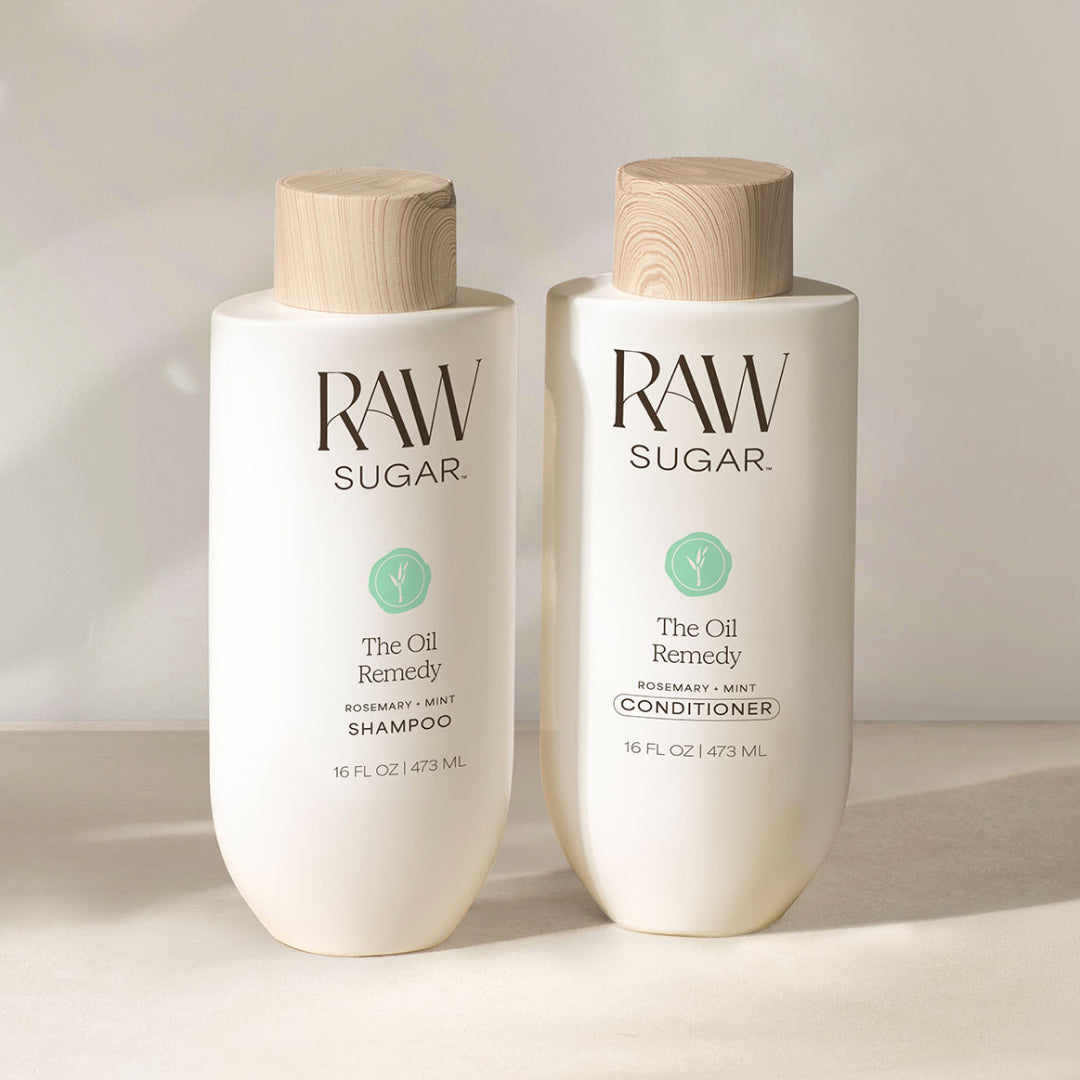
Not sure which routine fits your hair? The Raw Sugar hair routine finder walks through the options by hair type and concern.
The Raw Sugar Clean Girl Edit
Here is what a clean ingredient everything shower actually looks like in practice with Raw Sugar products.
If you have a sensitive scalp or prefer to skip fragrance entirely, The Sensitive One Shampoo is the anchor of a clean everything shower routine. Formulated without fragrance or SLS/SLES and formulated specifically for reactive scalps, it cleanses gently without stripping the scalp or triggering irritation. It is also a great option for anyone who has been dealing with scalp dryness and has not been able to pin down the cause.
Beyond that, the Raw Sugar hair collection covers every step of the wash and condition routine, with formulas built for a range of hair types from fine and straight to thick and coily. All are formulated without SLS/SLES, parabens, phthalates, silicones or synthetic dyes. All product fragrances are formulated to comply with EU and IFRA standards to support those who may be sensitive to fragrance, but the sensitive skin collection extends the clean approach to body care, with gentle cleansers and fragrance-free options for skin that needs a little more consideration.
Build Your Clean Girl Everything Shower With Ingredients You Can Actually Trust
The everything shower is worth the time it takes. Having a clear routine, doing each step in order, and knowing what is in your products transforms it from a long shower into something that genuinely pays off for your hair and skin over time.
The clean girl aesthetic got people interested. Clean ingredients are what make it last. Your scalp, skin, and hair respond to what you put on them every week, and the products in your everything shower are some of the most repeated exposures your body gets. Choosing formulas that are gentle, transparent, and actually effective is the part of the routine nobody talks about enough.
Shop Raw Sugar's hair collection and sensitive skin collection to build an everything shower routine with clean ingredients you can actually trust.